

What if the most effective solution for your baby's persistent nappy rash wasn't a thicker cream, but a change to high-performance bamboo nappies? It is a question many parents are asking as they face the reality of the 3.6 billion single-use nappies sent to landfill or incineration in England every year. You want a choice that protects your little one's delicate skin whilst also honouring your commitment to the environment. It's natural to feel a sense of conflict between the convenience of disposables and the guilt of plastic waste.
We understand that your priority is a happy, comfortable baby who sleeps through the night without the worry of leaks. In this guide, you'll discover why these plant-based solutions have become the gold standard for sensitive skin and sustainable parenting in 2026. We will explore how their natural breathability keeps skin healthy and how a simplified, ethical routine can offer you true peace of mind. By the end, you'll have the knowledge to choose a path that is both gentle on your baby and kinder to the planet.
Key Takeaways
- Understand how the smooth, round fibres of bamboo eliminate the "nappy sweat" and irritation often caused by standard plastic-based disposables.
- Compare the superior absorbency and capillary action of bamboo nappies against conventional options to ensure your baby stays dry throughout the night.
- Learn why choosing plant-based materials over petroleum-derived plastics is a vital step toward a carbon-neutral home and a reduced environmental footprint.
- Master the "two-finger rule" and specific sizing techniques to provide a comfortable fit that prevents leaks whilst protecting delicate skin.
- Discover why B-Corp certification and plastic-free packaging are the hallmarks of a truly ethical and transparent parenting routine.
The Hidden Impact of Standard Nappies on Baby Skin and the Environment
Many parents are surprised to learn that standard disposable nappies are often composed of up to 80% plastic. This dense material creates a "greenhouse effect" around a baby's bottom, leading to what many experts call "nappy sweat". When heat and moisture are trapped without ventilation, the skin's natural protective barrier begins to break down. It's this lack of breathability that serves as the perfect breeding ground for fungal nappy rash. Whilst conventional brands focus on containment, they often overlook the necessity of airflow for delicate skin.
The environmental cost is equally staggering. In England, approximately 3.6 billion single-use nappies are sent to landfill or incineration every year. Because these products are largely made from petroleum-based plastics, they don't simply disappear. They linger in our environment for centuries, breaking down into microplastics that eventually enter our wider ecosystem. Choosing bamboo nappies represents a shift away from this linear "take-make-waste" model towards a more circular approach to parenting that respects the world your child will inherit.
Chemicals and Nappy Rash: The Sensitivity Factor
Mass-market nappies frequently contain hidden irritants like chlorine, used for bleaching, and phthalates, which are often found in fragrances or printed patterns. These substances can be incredibly harsh on a newborn’s skin. Standard liners are designed to keep liquid in, but they can also trap moisture directly against the body. Purity in the materials used is essential. While Super Absorbent Polymers (SAP) are necessary for dryness, the quality and surrounding materials dictate whether they protect or irritate. Nappy rash is a combination of friction, moisture, and chemical irritants.
The Plastic Problem: Why 400 Years is Too Long
The legacy of a single child's nappy use can last for over four centuries. When we examine the environmental impact of cloth versus disposable diapers, the sheer volume of plastic waste from standard disposables becomes a heavy burden for the next generation. Microplastics from these discarded items shed into the soil and waterways, affecting biodiversity long after your child has grown. Modern parents are increasingly looking for ways to reduce this footprint without sacrificing the ease of a disposable routine. High-quality bamboo nappies offer that middle ground, providing high-performance protection that aligns with ethical manufacturing and a commitment to a healthier planet.
Material Science: Why Bamboo is the Superior Choice for Nappies
The secret to the comfort of bamboo lies in its microscopic structure. Whilst standard nappies rely on wood pulp fibres that appear jagged and splinter-like under a lens, bamboo fibres are naturally round and smooth. This physical difference is why many parents notice an immediate reduction in redness when switching to bamboo nappies. These smooth fibres glide against your baby's skin rather than catching on it, providing a level of softness that synthetic alternatives simply cannot replicate. Beyond the texture, bamboo contains a unique bio-agent known as "bamboo kun". This natural property makes the plant resistant to pests in the wild and provides inherent antibacterial qualities to the finished fabric, helping to keep your baby's skin pure and healthy.
Thermoregulation and Breathability: Keeping Cool and Dry
Bamboo is a highly porous material. At a microscopic level, these tiny gaps allow for incredible air circulation, which is vital for maintaining a healthy skin pH. This constant flow of air prevents the build-up of ammonia and inhibits the growth of bacteria, offering a protective shield for babies with eczema or hayfever-prone skin. It's also a natural thermoregulator. Studies suggest that choosing bamboo nappies can help keep a baby's skin up to 2 degrees cooler during the height of summer and comfortably warmer in the winter months. By choosing materials that breathe, you avoid the hazardous chemicals in disposable diapers that are often used to mask odours caused by poor ventilation.
Absorbing the Facts: How Bamboo Performs Under Pressure
Performance is non-negotiable for busy parents. Bamboo excels here through its unique capillary action, a process where moisture is pulled deep into the core of the fibre and held away from the surface. This wicking ability is significantly faster than cotton, ensuring that your baby's skin stays dry even during long night-time stretches. Bamboo can absorb up to three times its weight in water. This high capacity allows for thinner, less bulky designs that don't compromise on protection. Unlike synthetic liners that can feel damp to the touch once saturated, bamboo's structure keeps the surface layer crisp and dry. By incorporating these dedicated stay-dry layers, these nappies ensure that liquid is trapped securely, preventing the leaks that can disrupt a peaceful sleep. If you're ready to experience this material science firsthand, you can explore our range of bamboo nappies designed for ultimate skin health.
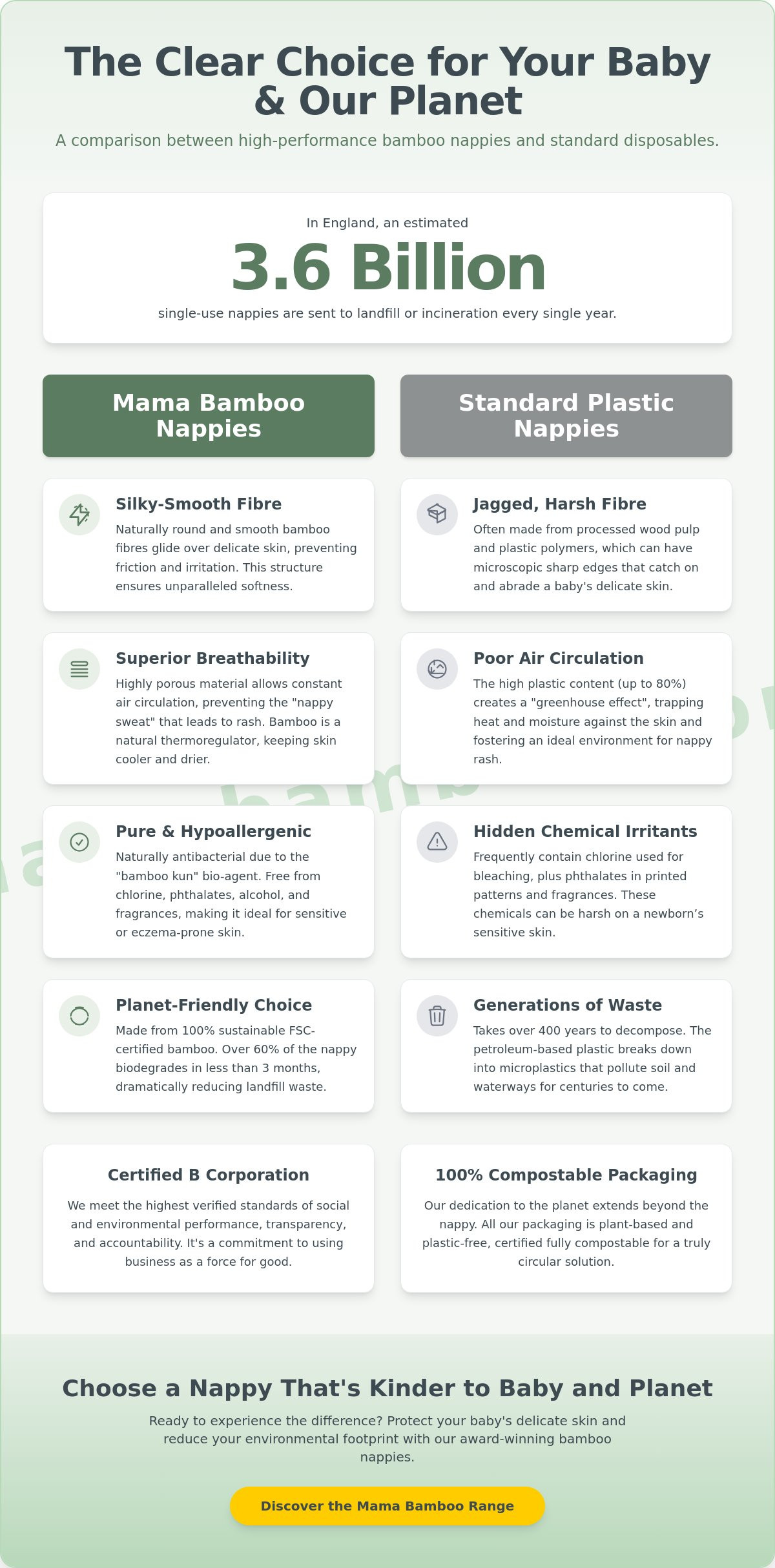
Bamboo Nappies vs. Standard Disposables: A Performance Comparison
When you hold a standard disposable nappy alongside a bamboo alternative, the difference is immediate. It's a choice between petroleum-based plastics and a carbon-neutral alternative. Whilst standard options rely on a complex web of synthetic polymers and wood pulp, bamboo offers a naturally high-performance alternative that respects your baby's skin and the planet's future. The sustainable properties of bamboo ensure that it grows rapidly with minimal water and no pesticides, creating a stark contrast to the resource-heavy production of plastic-based nappies. This shift in material doesn't just benefit the environment; it transforms the daily experience of nappy changes for both you and your little one.
Performance in the real world is where bamboo nappies truly shine. Standard nappies often rely on chemical fragrances and thick plastic backsheets to manage odours and leaks, which can lead to skin irritation. In contrast, bamboo's natural breathability and superior absorbency mean that moisture is managed more effectively. You'll find that the flexible waistbands and carefully engineered leg cuffs in bamboo designs provide a more tailored fit. This prevents the "blowouts" and night-time leaks that are common with more rigid, mass-market designs, ensuring your baby stays comfortable whether they're sleeping soundly or exploring the world.
Comfort and Softness: The Silk-Like Feel of Bamboo
Newborn skin is paper-thin and incredibly delicate, making the texture of what they wear a vital consideration. Standard disposables can often feel stiff and paper-like, which can lead to friction-based chafing, especially as your baby begins to crawl and move. Bamboo has a sensory profile closer to silk or cashmere. This incredible softness is critical for preventing redness around the thighs and waist. By choosing a material that moves with your baby, you're providing a gentle embrace that protects their skin's integrity during every milestone.
Cost vs. Value: Why Quality Nappies Save Money
It's common to look at the shelf price of nappies, but the true metric for your family budget is the "cost per wear". Because bamboo is significantly more absorbent than synthetic liners, you'll often find yourself using fewer nappies throughout the day. A standard nappy might require a change at the first sign of dampness to prevent irritation, whereas bamboo's wicking ability keeps the skin dry for longer. There are also hidden savings to consider. When you reduce the frequency of nappy rash, you spend less on expensive medicated creams and treatments. Many parents also find that opting for a subscription model or buying in bulk brings the price per nappy down significantly, making the gold standard of skin care much more accessible for the modern UK household.
Just as you prioritise quality for your baby's skin, choosing premium, natural snacks for your own pantry is a great way to maintain your energy; to explore gourmet options, click here.
How to Choose and Use Bamboo Nappies for Maximum Success
Transitioning to a more mindful nappy routine is a rewarding journey for any parent. Whilst the benefits of the material are clear, achieving the best results requires a few practical adjustments to your daily habits. Because bamboo nappies are more flexible and breathable than their plastic counterparts, they behave slightly differently during wear. Following a few simple steps ensures that your baby remains dry, comfortable, and protected throughout the day and night.
- Step 1: Assess your baby's weight and body shape. Don't rely solely on age, as a chunky thigh or a slim waist can change which size provides the most secure seal.
- Step 2: Apply the "two-finger rule". Once the nappy is fastened, you should be able to fit two fingers comfortably between the waistband and your baby's tummy to ensure proper circulation.
- Step 3: Check the leg ruffles. Always run your finger around the leg elastic to ensure the ruffles are turned outwards, which is the most effective way to prevent "blowouts".
- Step 4: Set up a flexible subscription. This removes the stress of last-minute supermarket runs and ensures you always have a fresh supply of essentials at your door.
- Step 5: Dispose of the nappy responsibly. Even though bamboo is a plant-based material, following local UK council guidelines for disposal helps maintain a clean and efficient waste stream.
Finding the Perfect Fit: Size Guides and Leak Prevention
One of the most common signs that it's time to move up a size is the appearance of faint red marks on your baby's thighs or tummy. If you notice these, or if you begin to experience frequent leaks, it is likely that the current size is too small. You'll find that bamboo nappies often offer a more generous, adaptable fit than standard brands because the material has a natural give. For night-time success, ensure the nappy is pulled up slightly higher at the back for sleepers who move around, or higher at the front for tummy sleepers. This small adjustment helps the absorbent core stay in the optimal position for 12-hour dryness.
Managing Your Supply: The Benefits of a Flexible Subscription
Estimating your monthly usage becomes easier as your baby grows. Newborns typically require more frequent changes, but as they move towards the toddler years, the number of nappies used per day decreases. A flexible subscription allows you to bundle your nappies with other essentials like bamboo baby wipes and organic baby lotion, simplifying your shopping routine into one monthly delivery. The ability to pause your order or change sizes instantly is vital as your baby hits sudden growth spurts. To simplify your routine and ensure you're always prepared, you can set up your personalised nappy subscription today.
Why Mama Bamboo is the UK’s Favourite Conscientious Choice
Choosing the right nappy is one of the most frequent decisions you'll make in your baby's first years. Whilst many brands claim to be "green," Mama Bamboo has built a reputation as a trusted companion for UK parents through transparency and proven impact. We don't just offer an alternative; we provide a high-performance skin solution that happens to be deeply respectful of the environment. From our award-winning bamboo nappies to our carbon-neutral shipping, every choice we make is designed to alleviate the anxieties of modern parenting. By selecting plastic-free packaging and ensuring our entire supply chain is ethical, we help you create a sustainable home without sacrificing the convenience your busy life requires.
Our commitment extends beyond the products themselves. We understand that your baby's needs evolve, which is why we've developed a holistic range to support every stage of their early development. Whether you're using our absorbent nappy pants for an active toddler or our organic baby shampoo for a soothing bedtime bath, you can trust that every ingredient and fibre has been chosen with purity in mind. This dedication to quality is why we are consistently voted "Best Eco Nappy" by parenting experts and, most importantly, by the families who use them every day.
B-Corp Certified: Beyond Just Eco-Friendly
Being a B-Corp certified leader in the UK means we meet the highest verified standards of social and environmental performance. It is a promise that our business prioritises people and the planet over mere profit. This certification covers everything from the fair treatment of workers in our bamboo forests to the total transparency of our manufacturing process. When you choose a B-Corp brand, you're supporting a global movement that seeks to protect the world for the next generation. It's about more than just a single purchase. It is a vote for a fairer, cleaner future where ethical sourcing is the standard rather than the exception.
Award-Winning Performance for Sensitive Skin
Parenting experts and dermatologists have recognised Mama Bamboo for excellence in skin health. Our bamboo nappies are celebrated for their silk-like softness and incredible breathability, which work in perfect harmony with our organic baby lotion and wipes. This synergy ensures that your baby's skin remains hydrated and protected from the irritants found in standard mass-market products. We believe that premium care should be accessible and simple to manage. By choosing our subscription service, you ensure that your nursery is always stocked with the very best for your little one's delicate skin. Experience the Mama Bamboo difference with our flexible subscription and join a community that puts your baby and the planet first.
Embracing a Gentler Future for Your Little One
Choosing the right path for your baby's skin and the planet doesn't have to be a compromise. By switching to bamboo nappies, you've seen how the combination of material science and ethical manufacturing can transform your daily routine. You are replacing harsh plastics and chemicals with a breathable, silk-like alternative that actively protects against irritation whilst significantly reducing your family's environmental footprint. It's a small change that carries a profound impact for the next generation.
As a B-Corp Certified leader, we're proud to offer a solution that is as responsible as it is effective. Our award-winning designs have been voted "Best Eco Nappy" by Mother & Baby, reflecting our commitment to quality and carbon-neutral shipping. We are here to support you with products that are gentle, pure, and high-performing. Join the Mama Bamboo family and save 20% on your first subscription box to begin your journey towards a more mindful lifestyle. You're doing a wonderful job, and we're honoured to be a part of your parenting story.
Frequently Asked Questions
Are bamboo nappies really better for nappy rash?
Yes, bamboo nappies are significantly better for preventing and managing nappy rash due to their natural breathability and silk-like fibres. Unlike standard plastic-lined disposables that trap heat and moisture, bamboo allows air to circulate freely around your baby's skin. This reduces the risk of fungal growth and friction-based irritation. The round, smooth structure of the fibre ensures it won't catch on delicate skin, providing a soothing environment for healing.
How long do bamboo nappies take to biodegrade in the UK?
Whilst bamboo is a plant-based material that can break down much faster than petroleum-based plastics, most nappies in the UK currently end up in landfill or incineration. In a managed composting environment, the bamboo components could degrade in months rather than centuries. However, without industrial composting facilities available at scale, we focus on reducing the initial plastic content and microplastics entering our ecosystem through our sustainable, plant-based designs.
Can bamboo nappies be used for overnight heavy wetters?
Yes, these nappies are an excellent choice for heavy wetters and can provide up to 12 hours of protection. Bamboo fibres possess a unique capillary action that wicks moisture deep into the absorbent core faster than cotton or wood pulp. This keeps the surface layer dry against your baby's skin. For the best results overnight, ensure you have the correct size and that the leg ruffles are turned outwards to prevent leaks.
What is the difference between bamboo nappies and bamboo nappy pants?
The primary difference lies in the fastening style and the developmental stage of your baby. Our standard nappies feature adjustable tabs, which are ideal for newborns and younger babies who are changed whilst lying down. Bamboo nappy pants are designed with a 360-degree stretchy waistband, making them perfect for active toddlers who are starting to crawl or stand. Both options offer the same high level of bamboo-based absorbency and skin protection.
Are bamboo nappies more expensive than standard disposables?
Whilst the initial price per nappy is higher than mass-market disposables, many parents find the "cost per wear" is surprisingly competitive. Because bamboo is more absorbent, you'll often find you need fewer changes throughout the day. You also save on the hidden costs of nappy rash treatments. Opting for a subscription service can further reduce your costs, making this premium skin care more affordable for your family budget.
Do bamboo nappies contain any plastic or chemicals?
Our nappies are designed to be as pure as possible, being free from chlorine, perfumes, and phthalates. Whilst most disposable nappies require a small amount of SAP (Super Absorbent Polymer) and elastic for performance, we've replaced the majority of petroleum-based plastics with sustainable bamboo. This significantly reduces the chemical load against your baby's skin and minimises the microplastics that would otherwise persist in the environment for hundreds of years.
How do I know what size bamboo nappy my baby needs?
Choosing the right size starts with your baby's current weight, but their unique body shape also plays a role. If you notice red marks on their thighs or frequent leaks, it's usually time to move up a size. Our bamboo nappies offer a generous and flexible fit. You should always be able to fit two fingers comfortably under the waistband to ensure your little one can move and breathe easily.
Can I recycle the packaging from Mama Bamboo nappies?
Yes, we're committed to a plastic-free future, which includes our packaging. Our nappy bags are made from compostable materials that can be disposed of in your food waste or home compost bin, depending on your local council's specific regulations. We aim to ensure that from the moment our products arrive at your door to the moment they are discarded, they leave the smallest possible footprint on the planet.